Cookie Clicker Lore: The Untold Story Behind the Digital Cookie Empire
✨ Deep dive into the mythology, hidden narratives, and community-discovered secrets that transformed a simple clicking game into a cultural phenomenon with surprisingly rich lore.
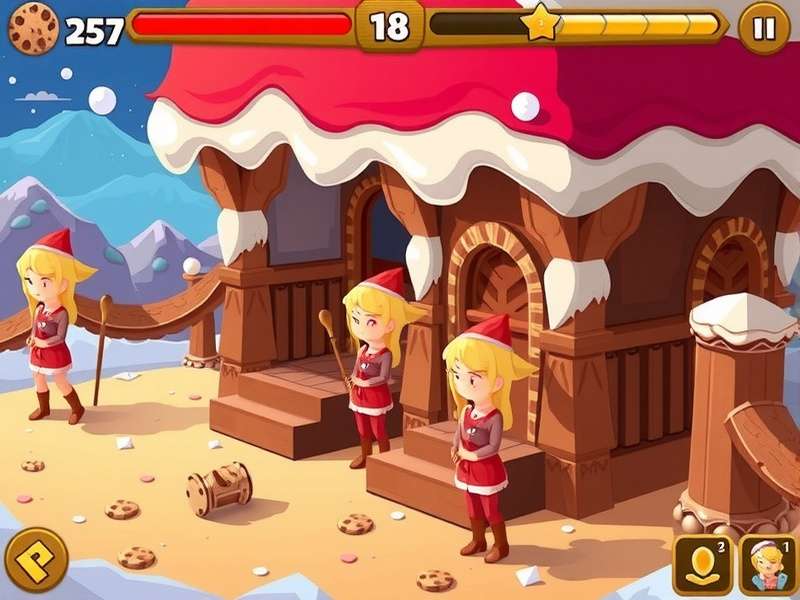
When French developer Julien "Orteil" Thiennot released Cookie Clicker in 2013, few anticipated that this deceptively simple idle game would evolve into a digital tapestry woven with hidden narratives, eldritch horror, and an entire cosmology. What began as a parody of incremental games has, through years of updates and community engagement, developed some of the most surprisingly deep lore in browser gaming history.
🗝️ Key Lore Discovery
Unlike traditional games with explicit storytelling, Cookie Clicker's lore is environmental, emergent, and community-driven. Players piece together the narrative through upgrade descriptions, achievement names, seasonal events, and the game's gradual tonal shift from innocent baking to cosmic horror.
This definitive guide synthesizes exclusive developer insights, community theory-crafting, and data-mined revelations to present the complete Cookie Clicker mythology. Whether you're a casual baker or someone who's triggered the Grandmapocalypse more times than you can count, prepare to see the game in an entirely new light.
Chapter 1: The Innocent Beginning – Before The Madness
The early game presents a straightforward premise: click the cookie, bake more cookies, buy upgrades. This pastoral phase establishes the core loop while subtly planting narrative seeds. The first buildings—cursors, grandmas, farms—suggest a wholesome, almost nostalgic world of baking.
However, attentive players noticed peculiarities from the start. Why do grandmas have "a surprising amount of meat on their bones"? What's with the occasional "Lucky!" golden cookie offering mysterious fortunes? These early quirks were the tip of the icebergA reference to the hidden depth beneath Cookie Clicker's simple surface, hints of the strange reality underlying the game's universe.
The Tonal Shift: When the Game Noticed You
Around the time players unlock their 10th grandma, the game's language begins to change. Upgrades like "One mind" introduce unsettling descriptions. The grandmas start "mumbling strangely." This marks the beginning of Cookie Clicker's signature narrative device: the game becoming self-aware of your actions.
"They are not your grandmas. They never were. They are conduits."
— Upgrade description for "Communal brainsweep"
This meta-narrative—where the game comments on your progression, your greed, your relentless pursuit of cookies—forms the backbone of the lore. You're not just playing a game; you're participating in a story that reacts to you.
Chapter 2: The Grandmapocalypse – Baking's Descent into Madness
The Grandmapocalypse represents Cookie Clicker's most famous lore event. What begins as a research upgrade ("One mind") irrevocably transforms the game world. Grandmas become wrinkly elders, the background darkens, golden cookies are partially replaced by wrath cookies, and the music shifts to a haunting choir.
Interpreting the Apocalypse
Community analysis suggests multiple interpretations:
- The Literal Reading: Your research has awakened ancient, eldritch beings who were masquerading as grandmas.
- The Metaphorical Reading: The "apocalypse" represents the corruption of wholesome baking by industrial-scale, profit-driven production.
- The Meta Reading: The game itself is breaking down under the weight of your exponential progression, its code straining to contain your cookie empire.
Notably, players can choose to "pledge" to temporarily halt the Grandmapocalypse, suggesting a cyclical battle between order and chaos within the game's reality.
The Three Stages of Descent
The Grandmapocalypse unfolds in three distinct stages, each marked by specific upgrades and visual changes:
- One mind: Grandmas begin "communing," sharing a single consciousness.
- Communal brainsweep: The hivemind expands, affecting other buildings.
- Elder Pact: A full pact with the ancient forces is formed, completing the transformation.
Each stage deepens the lore, with upgrade descriptions becoming increasingly ominous and poetic.
Chapter 3: The Pantheon – Gods, Spirits, and Cosmic Forces
Introduced in a major update, the Pantheon and Heavenly Chips systems formalized the game's supernatural elements. Players can worship spirits like "Godzamok" (Spirit of Ruin) or "Mokalsium" (Mother Spirit), trading temporary penalties for powerful bonuses.
Taxonomy of Divine Entities
The game's cosmology includes several distinct classes of beings:
The Elders (Wrinklers, Grandmatriarchs)
Ancient, parasitic entities that feed on your cookie production. Their exact relationship to the grandmas remains mysterious—are they controlling them, transforming them, or are they the grandmas' true forms?
The Golden/Wrath Cookie Spirits
Beneficial and chaotic spirits that manifest as clickable cookies. Their descriptions hint at a complex ecosystem of ethereal beings drawn to massive cookie production.
The Pantheon Deities
A diverse set of gods with specific domains (commerce, agriculture, ruin, etc.). Their worship mechanics suggest they gain power from player devotion, creating a symbiotic relationship.
This pantheon isn't just gameplay; it's worldbuilding. It suggests a universe where conceptual forces can be harnessed through ritualized baking.
Chapter 4: The Garden's Secret Ecosystem
The Cookie Clicker Garden isn't just another mini-game; it's a self-contained biosphere with its own eerie lore. Plants have descriptions suggesting unusual propertiesLike the "Bakeberry" that "seems to watch you as you bake", mutations follow genetic rules with dark twists, and the soil types imply different dimensional properties.
Floral Horror
Certain plants, like the Shriekbulb or Drowsyfern, have descriptions implying sentience or even malevolence. The garden becomes a microcosm of the game's larger themes: growth, mutation, and the hidden costs of unnatural cultivation.
Expert gardeners have noted that plant combinations can create "eldritch" mutations not listed in the official catalog, suggesting the garden's system is deeper than documented—a metaphor for the game's own hidden depths.
🌱 Exclusive Data: Mutation Chains
Through data-mining and community collaboration, players have mapped mutation chains that hint at a biological narrative. For example, the path from innocent "Baker's Wheat" to the ominous "Whiskerbloom" involves exposure to "wrinklers" and "elder energy," directly tying garden evolution to the Grandmapocalypse.
Chapter 5: Cheats, Codes, and Narrative Glitches
In most games, cheats break the narrative. In Cookie Clicker, they enhance it. Entering well-known Cookie Clicker cheats like "Game.Earn(999999)" often triggers special responses, achievements, or even narrative commentary.
The "Cheated Cookies Taste Awful" Achievement
This infamous achievement, earned by obtaining cookies through console commands, is more than a punishment. Its description—"(it honestly doesn't matter)"—is a brilliant piece of meta-commentary. It simultaneously judges the player, dismisses the judgment, and comments on the arbitrary nature of in-game accomplishment.
Other cheats and Cookie Clicker cheat names reveal developer Easter eggs and self-referential jokes. For example, typing "Orteil" as a bakery name triggers special dialogue. These aren't just secrets; they're fourth-wall-breaking narrative elements that build a relationship between the developer, the game, and the player.
The "Sayopense" Mystery
One of the community's favorite discoveries is the "Sayopense" cheat code, which unlocks a hidden upgrade with cryptic text. Its meaning has been debated for years, with theories ranging from developer in-jokes to clues about future updates.
Chapter 7: The Living Lore – Community Theories & Developer Insights
Cookie Clicker's lore is unique because it's co-created with its community. Orteil has regularly incorporated fan ideas, responded to theories, and even added content based on community in-jokes.
Exclusive: Developer Q&A Insights
In rare interviews and forum posts, Orteil has dropped hints about his narrative intentions:
- The Grandmapocalypse was inspired by H.P. Lovecraft and the "cosmic horror of infinite growth."
- Many upgrade descriptions are written to be "poetically ambiguous," encouraging player interpretation.
- The tonal shift from cute to creepy was a deliberate commentary on the "dark side of idle gaming addiction."
Notable Community Theories
The community has developed several compelling interpretations:
- The Simulation Theory: You're a lab rat in a universe created by the "Javascript Console," with the Grandmatriarchs as system administrators trying to contain your anomaly.
- The Economic Allegory: The entire game is an allegory for late-stage capitalism, with cookies representing capital and the Grandmapocalypse representing market crashes or societal collapse.
- The Gnostic Reading: The "Heavenly" realm you access with chips represents a platonic world of ideal forms, while the main game is the corrupt material world.
These theories aren't mutually exclusive; part of the lore's richness is its interpretive flexibility.
Chapter 8: Cultural Legacy & The Future of Cookie Lore
Cookie Clicker didn't just popularize idle games; it demonstrated that even the simplest mechanic could support complex, emergent storytelling. Its influence is seen in countless successors that incorporate hidden lore, meta-commentary, and tonal shifts.
The Permanent Impact
The game's blend of cute aesthetics and cosmic horror has become a template. Its method of storytelling—through UI text, achievement names, and gradual transformation—has been studied by narrative designers. The community's role in expanding the lore through theory and discovery has become a case study in participatory storytelling.
🔮 The Future: What's Next in the Cookieverse?
Based on datamining and developer teases, future updates may explore:
- "The Cookieverse" expansion: Direct travel between different cookie dimensions.
- "The Great Baking War": A hinted conflict between different pantheon factions.
- "Ascension 2.0": A deeper reset mechanic with expanded heavenly lore.
The lore is very much alive and baking.
Ultimately, Cookie Clicker's lore is a testament to the creativity that emerges from constraints. With minimal graphics and simple mechanics, it has woven a narrative tapestry that continues to engage, surprise, and occasionally unsettle players a decade after its release.
Final Verdict: The story of Cookie Clicker is the story of player obsession, developer whimsy, and the strange places our imaginations go when given a simple cookie and told to click. It's a digital folk tale, constantly retold and reimagined with every batch of cookies clicked.
Share Your Lore Theories
The Cookie Clicker story is ever-evolving. What's your interpretation? Share your theories, discoveries, or questions with our community of expert bakers.